Thursday, December 10, 2009 - Brantley Lake State Park, Carlsbad NM
< previous day | archives | next day >
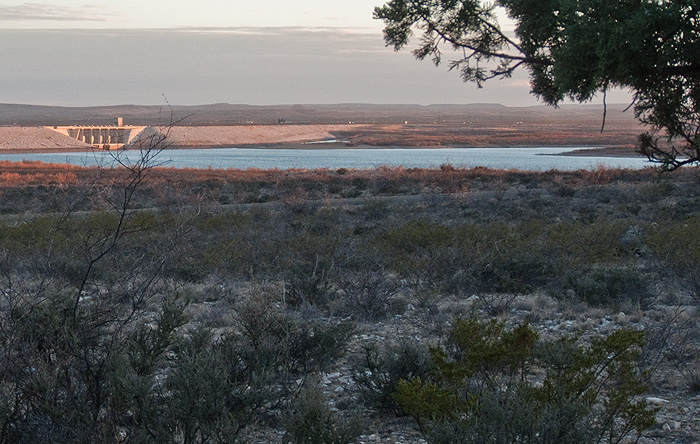
Sunset at the dam, Brantley Lake State Park, Carlsbad NM, December 10, 2009
This was a nice quiet day, much of it spent working at straightening out the mess over at Clippings and Collectanea. I made some headway but there sure is a lot to do to get those pages in order. What a mess!
Night camp
Site 42 - Brantley Lake State Park, Carlsbad NM
- Verizon cell phone service - Access is via Extended Network, roaming
- No Verizon EVDO service - access is via the Extended Network and service varies with many drop-outs.
- See a list of the nights I've camped at Brantley Lake State Park
- Locate Brantley Lake State Park on my Night Camps map
- Go to Brantley Lake State Park website
- Locate services on my Resources map
- Check the weather here
When Hope Dies
When you give up on hope, something even better happens than it not killing you, which is that in some sense it does kill you. You die. And there's a wonderful thing about being dead, which is that they—those in power—cannot really touch you anymore. Not through promises, not through threats, not through violence itself. Once you're dead in this way, you can still sing, you can still dance, you can still make love, you can still fight like hell—you can still live because you are still alive, more alive in fact than ever before. You come to realize that when hope died, the you who died with the hope was not you, but was the you who depended on those who exploit you, the you who believed that those who exploit you will somehow stop on their own, the you who believed in the mythologies propagated by those who exploit you in order to facilitate that exploitation. The socially constructed you died. The civilized you died. The manufactured, fabricated, stamped, molded you died. The victim died.
And who is left when that you dies? You are left. Animal you. Naked you. Vulnerable (and invulnerable) you. Mortal you. Survivor you. The you who thinks not what the culture taught you to think but what you think. The you who feels not what the culture taught you to feel but what you feel. The you who is not who the culture taught you to be but who you are. The you who can say yes, the you who can say no.