Tuesday, January 18, 2011 - Bosque Birdwatchers RV Park, San Antonio NM
< previous day | archives | next day >
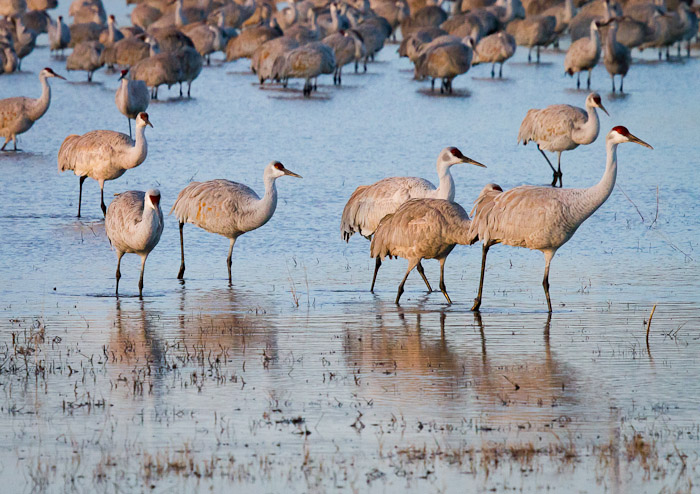
Going to Breakfast, Sandhill Cranes, Bosque del Apache National Wildlife Refuge, San Antonio NM, January 17, 2011
It's about Thyme
Thyme is my favorite herb; I use it in everything. Last summer I picked up a big container of organic thyme at a local farmers market. It's almost empty so when I was in Deming I put it on my list for a trip to Peppers, the local supermarket. Guess what? They had no thyme, unless you count those little McCormick "samples." Same thing at Bullock's in Truth or Consequences when I stopped there on my way through last Sunday. What's up with that - doesn't anyone cook with thyme in southern New Mexico? Or eat almonds; they've gone missing too?
Night camp
Site 10 - Bosque Bird Watcher's RV Park, San Antonio NM
- This is a basic, small Mom & Pop RV Park with full hookups.
- Verizon cell phone and Broadband service are available here with a strong signal.
- Locate Bosque Bird Watcher's RV Park on my Night Camps map
- Click for Google street view
- Check the weather in San Antonio NM