Friday, February 10, 2012 - LoW-HI RV Ranch, Deming NM
< previous day | archives | next day >
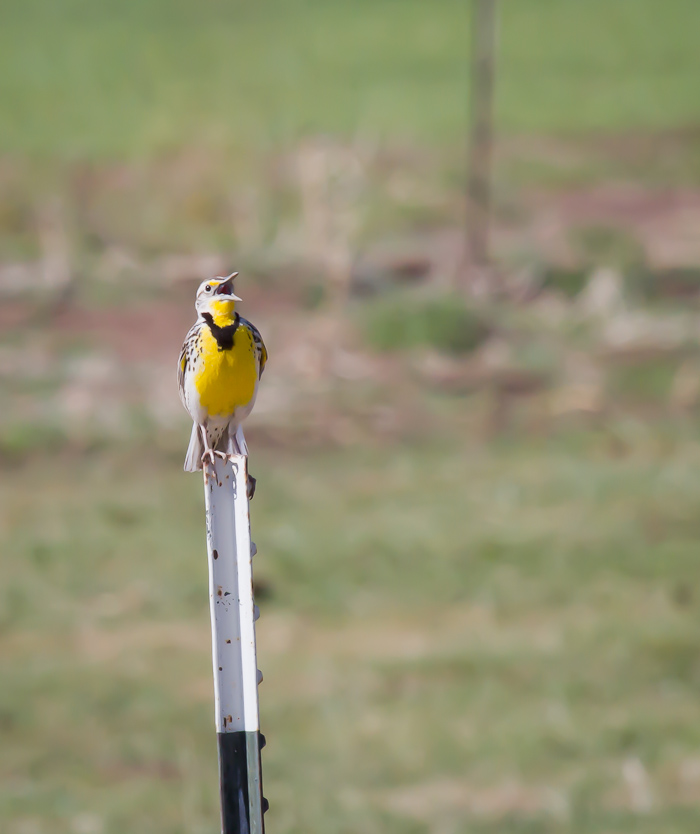
Western Meadowlark, San Antonio NM, April 15, 2010
Northward bound
Larger and larger flocks of Sandhill Cranes have been flying northward over the park the last few days, calling down to suggest I follow them up to the Bosque. And I think I will once my prepaid time here at LoWs runs out at the end of the month. Playing around with my Bosque pictures the last few days has gotten me in the mood to go get some more this spring.
Night camp
Site 8 - LoW-HI RV Ranch, Deming NM
- This is a spacious 65 site campground with most sites offering full hookups.
- Locate LoW-HI RV Ranch on my Night Camps map
- Verizon cell phone - strong signal
- Verizon Broadband - strong signal but often slow
- Check the weather in Deming NM
Troops Endure Blowing Sands and Mud Rain
... The single, solitary departure from this pattern came when it suddenly rained in the early evening. What fell from the sky was not water but mud, the rain pulling suspended sand into wet globs and pelting those foolish mortals who thought they could endure a 30- or 40-hour sandstorm. The temperature was just below 100 degrees, and everyone traveling with the military wore protective chemical and biological suits that enclosed the body from head to toe, plus body armor and a helmet. ...